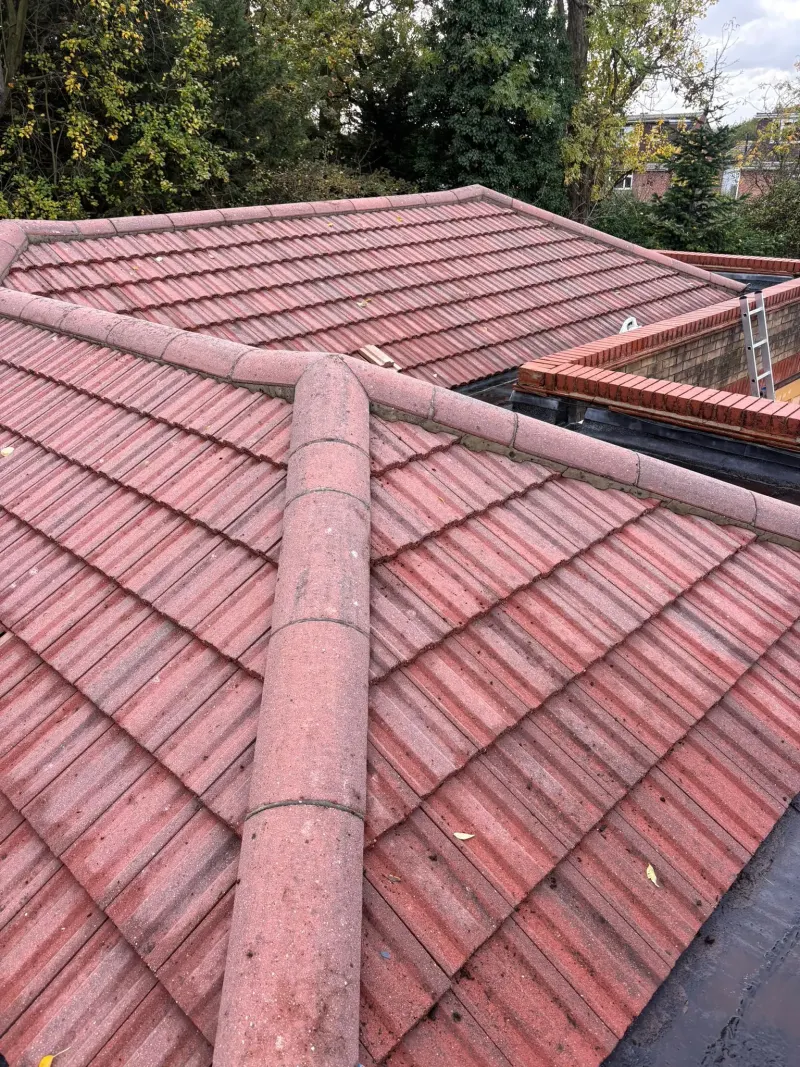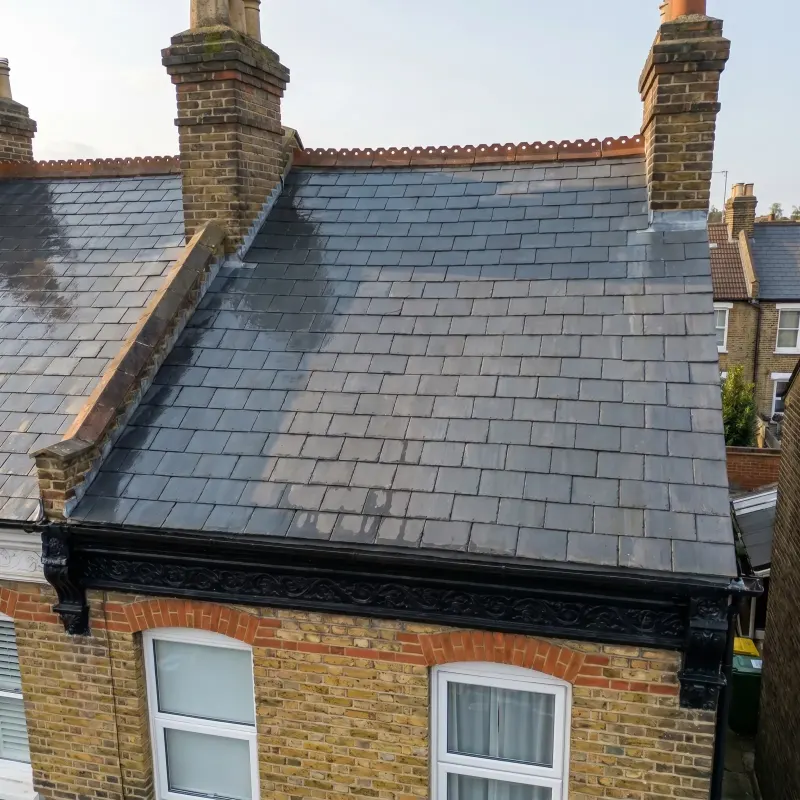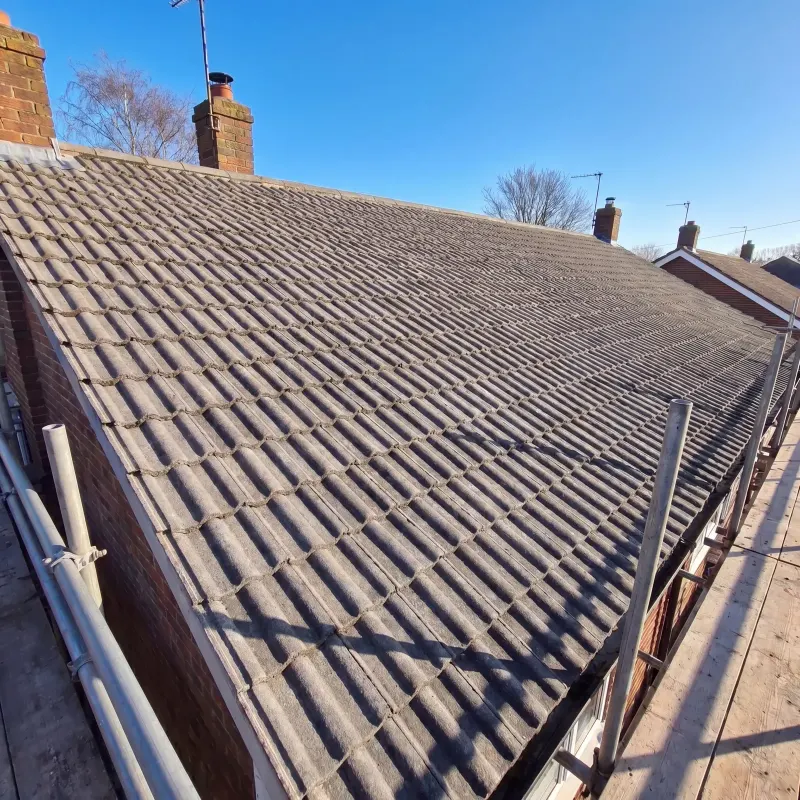
Roof cleaning done properly does not damage tiles. Damage comes from high-pressure jet washing, which strips the surface off concrete and clay tiles and can force water under them. A low-pressure soft wash with a biocide cleans the roof without that risk.
Where the damage comes from
Most of the horror stories about roof cleaning have the same cause: a pressure washer pointed at the roof. A jet of water strong enough to blast moss off is also strong enough to:
- Strip the top surface off concrete tiles, leaving them rougher and more porous than before, so moss comes back faster.
- Erode soft clay tiles and old handmade tiles.
- Drive water up and under the tile laps, into the battens and felt.
- Crack or dislodge slates and ridge tiles, and wash out old mortar.
It also makes a mess: moss and grit sprayed across windows, walls, cars and the neighbour’s garden.
What a soft wash does differently
A soft wash relies on the cleaning solution, not on force. Thick moss is lifted off by hand first. The roof is then wetted with a solution at low pressure, about what you’d get from a garden hose. It kills algae, lichen and moss roots, and the growth loosens and rinses away. A biocide finish keeps working for months afterwards.
Nothing is blasted, so the tile surface, the mortar and the fixings are left as they were. You can read more on our roof soft wash page.
Are some roofs more at risk?
- Clay tiles are softer than concrete and should never be pressure washed.
- Slate is hard, but the nails and hooks holding it aren’t. Force can lift slates.
- Old concrete tiles have already lost some surface; jet washing takes more.
- Listed and historic roofs need the gentlest method there is, and sometimes council advice first.
What to ask any roof cleaner
- Will you use a pressure washer on the tiles? (The answer you want is no.)
- How do you get the thick moss off?
- Is a biocide included, and what does it do?
- What happens to the moss and debris, and the gutters?
- Will anyone walk on the roof?
Already had a roof jet washed?
It isn’t necessarily ruined. Look for broken or slipped tiles, missing ridge mortar and damp patches in the loft. If the tiles look rough and pitted, growth will come back faster; a biocide treatment every so often helps slow it down. If anything is broken, that’s a job for a roofer before any more cleaning.
Does a soft wash leave the roof looking patchy?
Not for long. On the day, moss and the worst of the algae come off, but dead lichen and some staining can still be visible. Over the following weeks the rain washes the dead growth away and the roof evens out. Patchiness that stays is usually the tile itself: older concrete tiles weather unevenly, and that was hidden under the moss.
What about the ridge and hip tiles?
Ridge and hip tiles are bedded in mortar on many older Essex roofs. A jet of water can wash weak mortar out of the joints, and that’s one of the most common bits of damage people find after a pressure-washed roof. A soft wash doesn’t do that. If we see mortar that is already cracked or missing, we’ll tell you and suggest a roofer looks at it before or after the clean.
Can walking on the roof break tiles?
Yes, and that has nothing to do with the cleaning method. Concrete tiles can crack under a foot in the wrong place, and slate and old clay break even more easily. We avoid walking on tiles wherever we can and plan how to reach each part of the roof before we start. When we quote, we’ll explain how we’ll get to yours.
How can I tell if my roof was damaged by a past clean?
Look from the ground for tiles that are a different colour or texture to their neighbours, pitted or rough faces on concrete tiles, gaps in the ridge mortar and slipped tiles. Inside, look in the loft after heavy rain for damp patches on the felt or timbers. Any of these is worth a roofer’s eye.
A roof that was jet washed years ago and has been fine since is usually fine. The surface may be rougher than it was, which mainly means moss comes back faster, so keeping it treated matters more.
Does the cleaning solution affect lead flashings or gutters?
Not in normal use. The solution is applied at low pressure to kill growth and rinsed where needed. Lead flashings, plastic gutters and metal fixings are left as they were. We’re careful around them anyway, because flashings are one of the places leaks start, and we don’t want water forced behind them.
What about the felt and battens under the tiles?
A soft wash doesn’t put water where it shouldn’t go. The tiles overlap so rain runs off them, and low pressure follows that same path. A jet of water aimed up the roof is what drives water under the laps and onto the felt and battens. That’s one of the clearest differences between the two methods.
Is roof cleaning ever a bad idea?
Yes, when the roof needs repair. Cleaning a roof with broken tiles or failing mortar won’t fix it and can hide the problem until the next storm. If the roof is near the end of its life, money may be better spent on a roofer’s report than on a clean. We’ll say so if we think that’s the case.
Will the cleaning solution harm the tiles?
No. The solution is chosen to kill growth, not to attack the tile. It is applied at low pressure and works on the moss, lichen and algae living on the surface. Tile, slate, mortar and lead are left as they were. Plants, ponds and pets below the roof are the things we take care around, and we talk you through that when we quote.