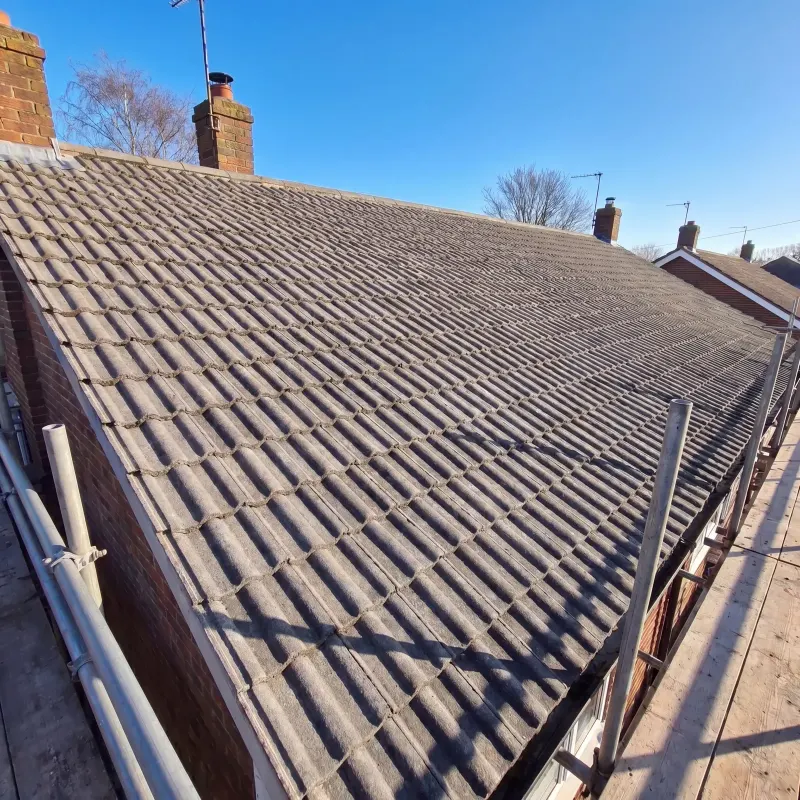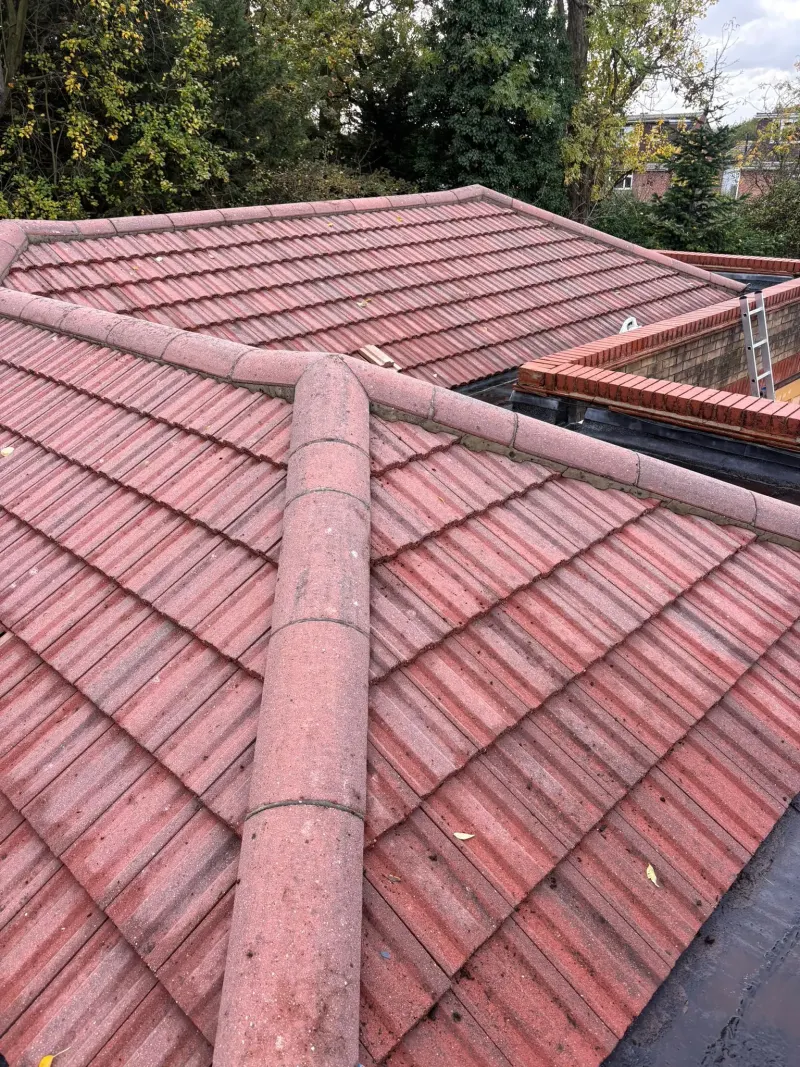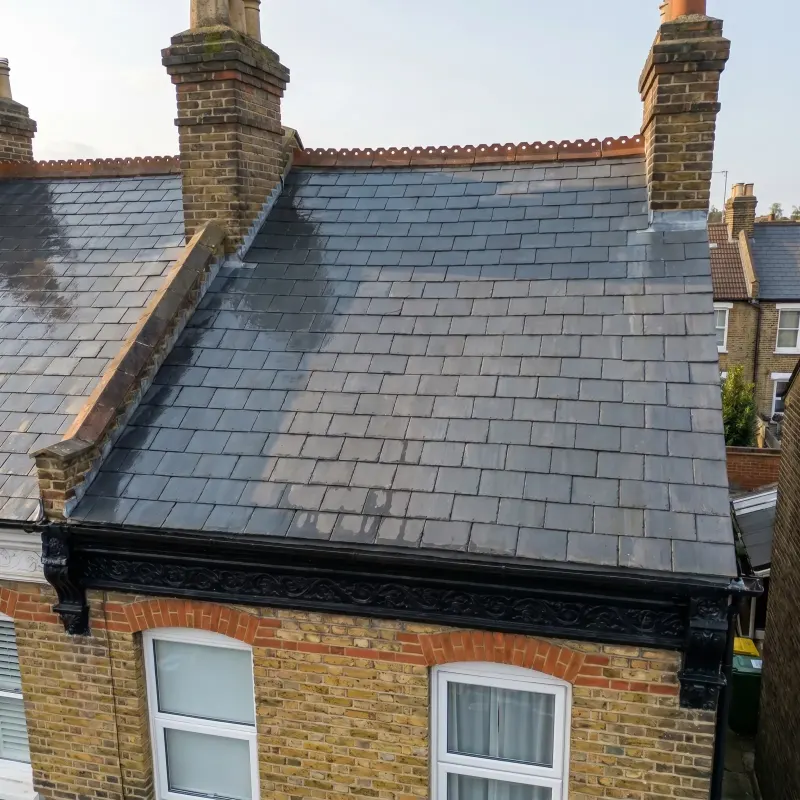
For tile and slate roofs, a soft wash is the right choice. It uses a cleaning solution at low pressure to kill moss, lichen and algae and lets them rinse away. A pressure wash removes growth by force, which can strip tile surfaces, lift slates and push water under the roof.
Side by side
| Soft wash | Pressure wash | |
|---|---|---|
| How it cleans | Cleaning solution kills growth; low pressure rinses it | High-pressure water knocks growth off |
| Tile surface | Left as it was | Can be stripped and roughened |
| Water under tiles | Very little risk | Can be driven under laps |
| Roots and spores | Killed, so growth is slower to return | Often left behind |
| Mess | Contained | Debris sprayed over walls, windows, cars |
| Best for | Roofs of every kind | Hard ground like driveways and patios |
Why pressure washing looks so good on video
A jet wash gives an instant result: one pass and the tile goes from green to clean. What the video doesn’t show is the surface of the tile going with the moss, and the growth back sooner on a roughened tile. Soft washing is slower to look finished, because the biocide keeps working after we’ve gone, but the roof is better off for it.
Is there ever a place for pressure on a roof?
Not on the tiles. Thick moss is better lifted off by hand. Pressure washing has its place on hard ground such as driveways and patios, where the surface is made for it.
What soft washing can’t do
- It won’t fix broken tiles or missing mortar. That needs a roofer.
- Old lichen dies quickly but can take months to fade and wash off.
- It won’t restore colour that weathering has taken from old concrete tiles.
More on our method: roof soft wash.
Is soft washing slower?
On the day, a little. Thick moss is lifted by hand first, which takes time, and the solution needs time to work. In return the roof isn’t damaged, the clean lasts longer and there’s far less mess. Most homes are still done in one visit.
Does soft washing use chemicals?
Yes. Soft washing works because a cleaning solution kills the growth; that’s the point of it. It’s applied at low pressure, on dry days, and kept to the roof. We take care around plants, ponds and pets, and we’ll tell you what to expect before we start.
What about a roof that has already been jet washed?
It can still be soft washed. Tiles that have been stripped by a jet wash are rougher, so moss can come back faster; a biocide finish matters even more on these roofs. If the jet wash has damaged tiles or washed mortar out of the ridge, that needs a roofer first.
What is a rotary or “surface” cleaner, and is it safe on a roof?
A rotary surface cleaner is a spinning pressure washer head designed for flat ground like patios. Some people run them over roof tiles. They’re still pressure washing: the spinning jets strip the surface of concrete tiles, can catch the edges of tiles and slates, and push water into the laps. They belong on driveways, not on roofs.
Is soft washing more expensive?
It can take a little longer on the day, but the comparison that matters is over the life of the roof. A soft-washed roof keeps its surface and, with the biocide, stays clean for longer. A jet-washed roof needs cleaning again sooner and may need repairs. We quote each roof for free so you can compare like with like.
Does soft washing work on really thick moss?
On its own, not quickly. That’s why thick moss is lifted off by hand first. The soft wash then deals with what hand clearing can’t: the roots, the spores, the algae film and the lichen. The two together give a clean roof without any blasting.
What do roofers think about pressure washing roofs?
Many roofers are wary of it, because they’re the ones called out to fix slipped tiles, washed-out ridges and leaks afterwards. Tile manufacturers generally advise against using high pressure on their products. If you’re unsure, ask a roofer you trust before you book any roof clean.
Can a soft wash be done from the ground?
Partly, on some roofs. Low pressure can carry the solution a fair way up a roof, which reduces how much anyone needs to be on or near the tiles. Hand clearing of thick moss still needs safe access to the roof itself. How we reach yours depends on its height, pitch and what is around it, and we explain it when we quote.
Which method do tile manufacturers recommend?
Manufacturers’ care guidance for concrete and clay tiles generally warns against high-pressure cleaning, because of the risk to the surface and to the weather-tightness of the roof. If you want to check for your own roof, the tile maker’s name is often stamped on the underside of a tile, and their website will have care information.
In short
- Soft wash for roofs, pressure wash for hard ground.
- Hand clearing removes thick moss without force.
- The biocide is what keeps a roof clean for longer.
How do I tell which method a roof cleaner uses?
Ask them directly whether a pressure washer will touch the tiles, and how they remove thick moss. A soft wash cleaner will talk about hand clearing, low pressure and a biocide. If the answer is a rotary surface cleaner or a lance on the tiles, that’s a pressure wash, whatever it’s called.