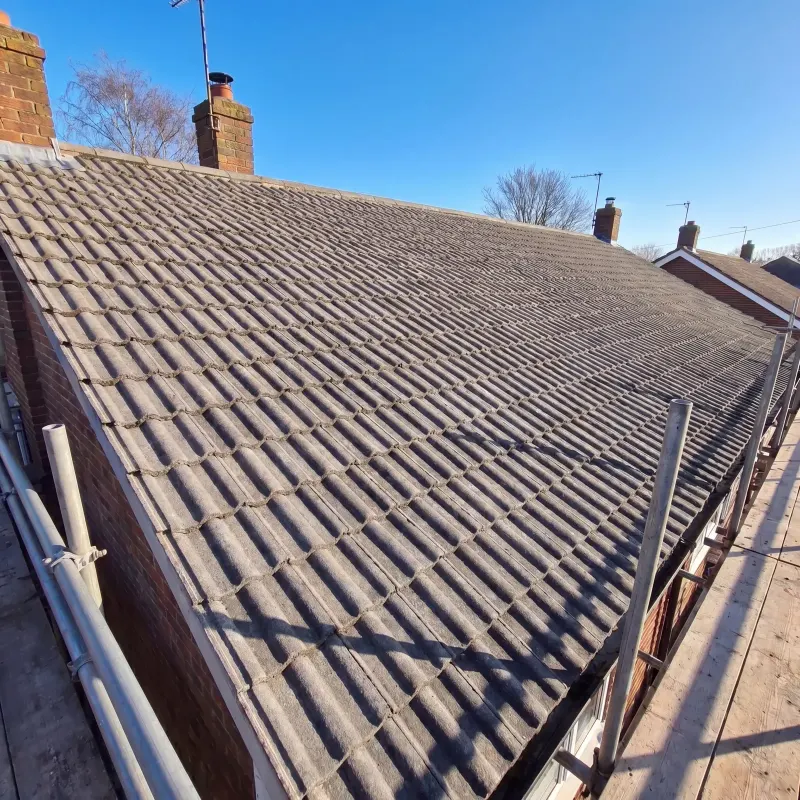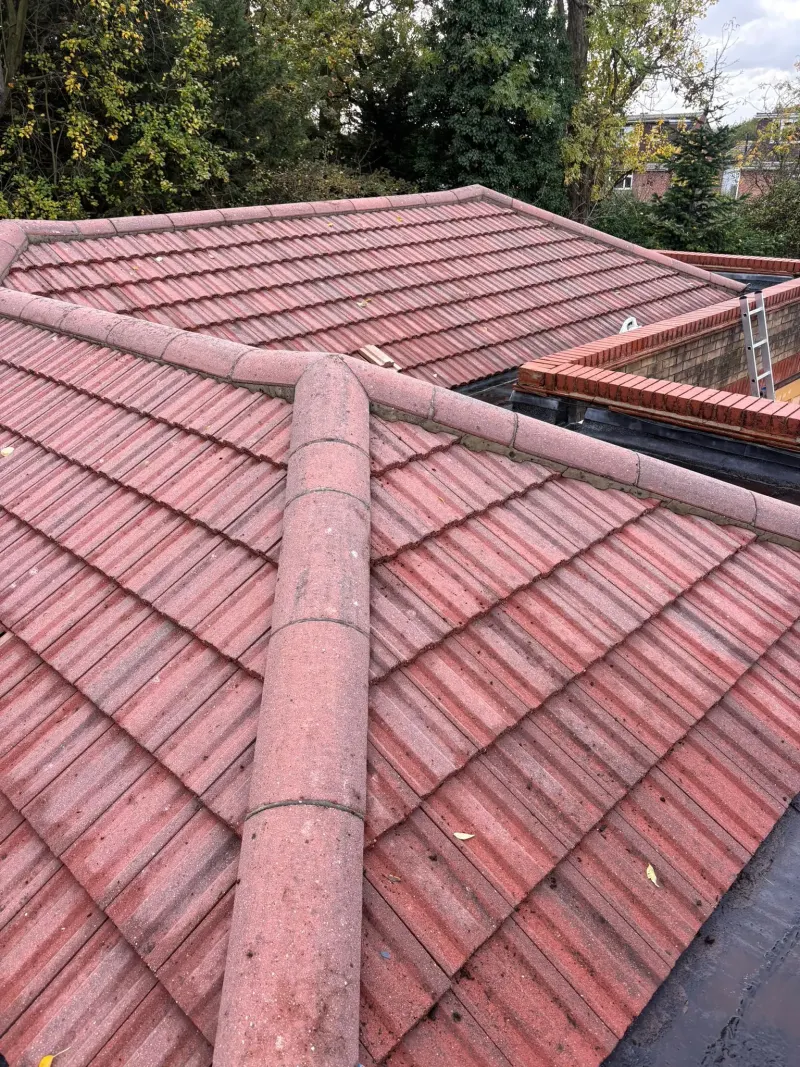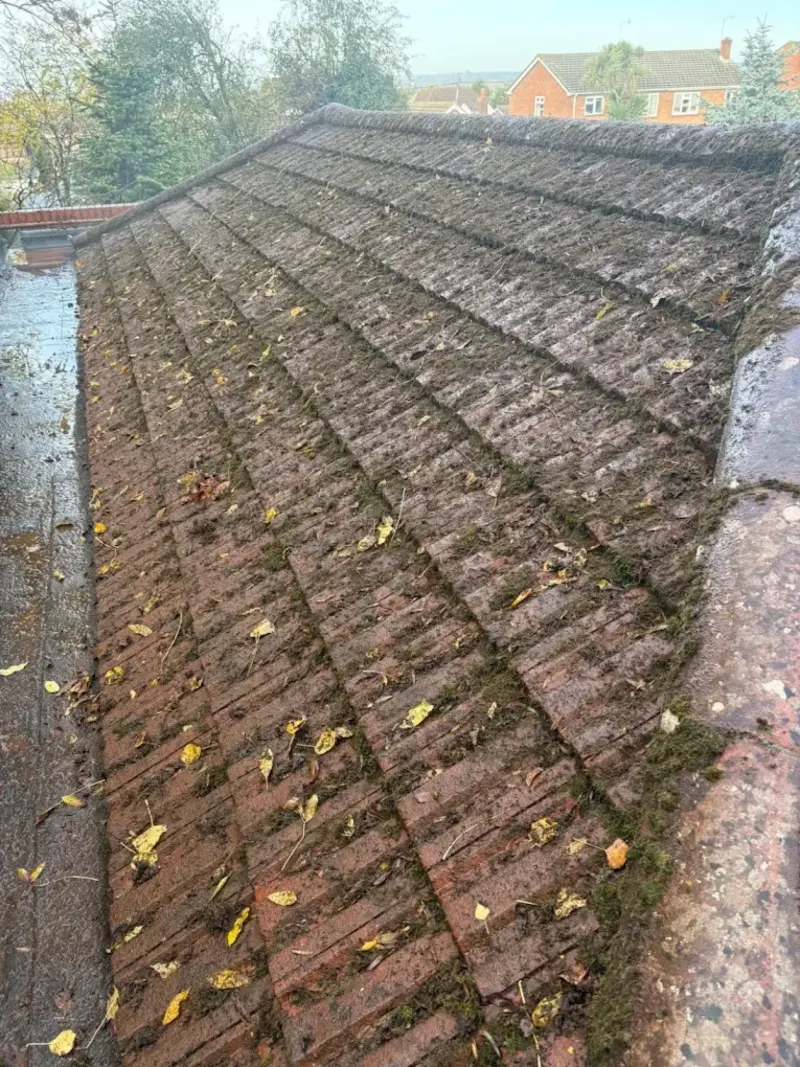
Your roof needs cleaning when moss, lichen or algae covers a good part of a slope, when moss is filling the gutters or falling on the ground, or when black streaks run down the tiles. A few spots on an older roof are normal and can wait.
1. Moss cushions on the tiles
Green, spongy moss is the most obvious sign. It holds water against the tiles like a sponge and, in winter, that water can freeze. Its roots also lift tiles slightly over time, opening gaps for wind-driven rain.
2. Moss in the gutters or on the ground
When clumps start landing on the path or filling the gutters, the roof is shedding. Blocked gutters overflow down walls, which is a bigger problem than the moss itself.
3. Black streaks
Dark streaks running down the roof are usually algae. It’s a living growth, it spreads, and it’s easy to mistake for dirt. A soft wash with biocide removes it.
4. Crusty lichen spots
Grey, white, yellow or orange circles, often on older clay and concrete tiles. Lichen is slow-growing and grips hard. It shouldn’t be scraped; a treatment kills it and it washes away over the following months.
5. The roof just looks old
Sometimes there’s no single problem, just a dull, dark roof that makes the whole house look tired. That’s often years of light growth, and a clean brings the colour back.
Signs you need a roofer, not a cleaner
- Slipped, cracked or missing tiles or slates.
- Missing or crumbling mortar on the ridge.
- Damp patches or daylight in the loft.
- A sagging roof line.
Any of those should be repaired first. Cleaning is maintenance, not a repair. If we see something like this when we quote, we’ll tell you.
Not sure?
Send us a photo from the garden or the street with your postcode. We’ll tell you honestly whether it needs a clean, a treatment only, or nothing yet. Get a free quote.
Can I check the roof myself safely?
Yes, from the ground. Look from the garden, the street or an upstairs window across the road; binoculars help. Don’t climb onto the roof or lean out of a loft window. Photos from the ground are also exactly what we need to quote.
Which side of the roof should I look at?
The side that gets the least sun, usually the north-facing slope, or the one under trees. Growth starts there first and is usually worst there. A roof can look fine from the front and be thick with moss on the back.
Is moss on the roof a reason to worry?
A little isn’t urgent. A lot is worth dealing with: thick moss holds water against the tiles, lifts them slightly as it grows, and washes down into the gutters, where it causes blockages and overflows. Dealing with it before it gets to that stage is cheaper and easier on the roof.
Does moss on the roof affect a house sale?
It can. A buyer’s surveyor will note heavy moss, blocked gutters and any damage they can see, and it makes a house look less cared for in photos. A clean and treatment before you list the house gives a better first impression. Book a few weeks ahead so dead growth has time to wash away.
What does moss in the gutters tell me?
That the roof is already shedding. Gutters full of moss mean growth has been loosening for a while, and the roof above is likely to have more. Clearing the gutters alone treats the symptom; the moss will keep arriving until the roof itself is dealt with. Our post on gutters and roof cleaning has more.
Is it worth cleaning a roof that is getting old?
Often, yes. An older roof that is sound still benefits from having moss removed, because moss holds water and blocks gutters. If the roof is close to needing replacement, with lots of slipped tiles or failing mortar, a roofer’s view comes first. We’ll be honest if we think a clean isn’t money well spent.
What should I photograph for a quote?
- Each slope of the roof, from the garden and the street.
- The worst patch of moss, as close as you can safely get from the ground.
- The gutters, if you can see them.
- Anything below the roof: conservatory, pond, greenhouse, drive.
When should I just leave it?
If there are only a few small cushions of moss, the gutters are clear and the roof looks sound, you can leave it and look again next spring. A roof doesn’t need to be spotless to be healthy. We’d rather tell you that than sell you a clean you don’t need, and if you send us a photo we’ll say so honestly.
Do flat roofs and extensions show the same signs?
Flat roofs show growth differently. Moss and algae gather where water pools, and grit and debris collect around outlets. Standing water that doesn’t drain away after a day or two is the main warning sign, and it’s often a job for a roofer rather than a cleaner. Pitched roofs over porches, bays and garages show the same signs as the main roof, just at eye level, which makes them a good early warning: if the porch roof is green, check the main roof above it.
Does the time of year change what I see?
Yes. Moss grows most from autumn to spring and can look brown and dry in a hot summer, when it’s easy to think it has gone. It hasn’t; it greens up again when the rain returns. Early spring, before the leaves are back on the trees, is a good time to look.